


conus snail shell
Conus scientific name: Conus princeps, belonging to the mollusk gastropod conus conus family conus genus. It is one of the largest species of conus (the largest shell length can reach 20cm), mainly distributed in the Atlantic Ocean (Caribbean Sea, Brazil) and Indian Ocean (East Africa, northwest Australia). Mainly distributed in the Atlantic Ocean (Caribbean Sea, Brazil) and the Indian Ocean (East Africa, northwest of Australia), water depth of 1-50 meters.

black abalone shell
The scientific name of the black abalone is Haliotis discus hannai, which belongs to the large marine shellfish of the genus Abalone (Haliotis) of the family Abalone (Haliotidae). It is named for its dark (black brown or dark brown) shell and its disc-shaped shape. Black abalone is one of the largest and most unique shell species in the genus Abalone, with 6-8 short antennae, developed into fleshy lumps ("abalone meat"), mucous glands on the surface, covering the shell mouth, and thin tubular protrusions on the edge.

Tapestry Vortex Shell
The tapestry vortex conch (Turbo setosus) belongs to the genus Vortex conch family Vortex conch of the mollusk phylum gastropod. The spiral part is short, the body spiral layer (lower part of the shell) is wide and conical, and the shell length is 10-30cm (up to 40cm); The shell surface is densely covered with dark and light brown, yellow or orange stripes, and some individuals have radial or grid patterns, which are similar to handmade brocade or tapestry as a whole. The shell is thick and hard (mainly composed of calcium carbonate), with pearl luster on the surface, the edge of some types of shells has a fine tooth-like structure (to enhance the tightness of the closure).

French screw shell
The French snail (Tritonia) belongs to the genus French snail family of the mollusca gastropod, which is about 200 species in the world and widely distributed in tropical to temperate waters. The shell length can reach 40cm (the maximum record is 60cm), conical or tower-shaped, with short spiral part and wide body spiral layer (lower part of the shell); The shell surface is densely covered with thick ribs (about 5-7 per cm), with fine growth lines between the ribs, mostly grayish white or light brown in color, some individuals with purple or orange spots, and the shell mouth is nearly round, the edges have a strong tooth-like structure (to enhance the tightness of the closure).

Prince Conus snail shell
Prince conus scientific name: Conus princeps, belonging to the mollusk phylum gastropod conus conus family conus. It is one of the largest species of conus (the largest shell length can reach 20cm), mainly distributed in the Atlantic Ocean (Caribbean Sea, Brazil) and Indian Ocean (East Africa, northwest Australia). Mainly distributed in the Atlantic Ocean (Caribbean Sea, Brazil) and the Indian Ocean (East Africa, northwest of Australia), water depth of 1-50 meters.

ship octopus shell
The octopus is an animal of the genus octopus, known locally as the white seahorse nest. The female body has a calcareous secondary shell, which is secreted by the interstitial membrane of the first pair of carps. The shell is very thin, translucent and brittle. There are many densely arranged radiating ribs on both sides of the shell. Some ribs have bifurcations. Each rib is connected with one wart process. The two rows of wart processes are very close to each other. The wart processes are sharp and small, about 50 or so. The shell surface is Milky White and the periphery of wart processes is brown. The male has no shell and winged wrists and is small in size. Floating when the shell mouth upward, when the winglike back wrist out, like a sail boat sailing in the sea, it is also known as "Nautilus.

Black Lip Mussel Shell
Black-lipped mussel scientific name: Brachidontes pharaonis, belonging to the genus Mussel of the clam clam clam family, the shell is medium in size (5-10cm long), oblong, thin but tough; The top of the shell is blunt, located at the front end, and the shell surface extends from the top of the shell to the ventral edge with fine concentric growth lines; the edge of the shell (lip) is dark black ("black lip" feature), and the inner surface of the shell is pearl luster (white or pale pink). Prefer tropical to subtropical coastal intertidal zones (high tide line to 5 m water depth), attached to rocks, coral reefs or artificial structures (e. g. piers).

Comb shaped scallop shell
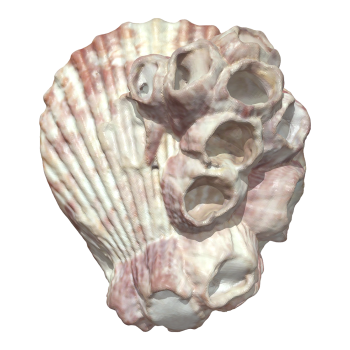
The scallop, also known as the scallop, belongs to the family of scallop in the order of pearl oysters. The shell is fan-shaped, with two shells that are low and flat, and the shell height is slightly greater than the shell length; Straight dorsal margin and round ventral margin; At the top of the shell, there are shell ears on the front and back of the top, with the front ear being larger; There is a pedis hole under the right anterior ear; The two shells are nearly equal in size, but the right shell is flatter and the left shell is more convex; There are spiny protrusions on the ribs, and the shell color changes, usually light brown; The color of the inner surface of the shell is light, mostly pink, with the same rib pattern as the shell surface; The hinge is straight, toothless, and the inner ligament is located in the groove of the three fish ligament. Due to its bright, thin, and hard shell, with multiple radiating ribs, it resembles a sunflower fan in appearance, and there is a depression on the ventral surface of the right shell in front of the ear.
Fan shell
Scallops are mollusks belonging to the family of sea clams in the order of pearl oysters. The shell is relatively large and nearly circular; Straight back edge; Top of the shell near the middle of the dorsal edge; Having ears on both sides, most species have unequal ears on both sides; Generally, there is a pedis foramen below the anterior ear of the right shell, and its ventral edge has several small comb teeth; Shell surfaces often have radiating ribs of various shapes, with scales or small spines on the ribs; The growth pattern is fine and regular. The shell colors are diverse; The complexion inside the shell is light and slightly glossy, often with internal ribs corresponding to the shell surface, and obvious muscle scars; The inner ligament is brown and located in the triangular ligament groove. The coat has a thick edge, developed coat eyes and tentacles, and no water pipes.

Oyster shell
The oyster, also known as the bear claw clam or the five clawed clam, is a bivalve species of the oyster genus in the family of clams. The shell length of oysters is generally 153 millimeters, with a height of 117 millimeters and a width of 113 millimeters. Some larger oysters can reach a length of 385 millimeters, a height of 250 millimeters, and weigh up to 10 kilograms. The inner surface of the shell is white and glossy, and the outer shell is curved into an arch shape with radioactive patterns on the surface and small red flat spots. Oysters inhabit shallow waters in coral reefs and near reef environments, which are often exposed to strong currents and waves. Oysters feed on particulate matter such as phytoplankton, zooplankton, and other nutrients in the water.

Oyster shell
Clams, also known as round clams, hard shell clams, or quails, are edible marine bivalve mollusks native to the east coasts of North and Central America, from Prince Edward Island to the Yucatan Peninsula. It is one of many unrelated edible bivalves, commonly referred to as clams in the United States. Hard clams are common throughout New England, northern Canada, and the East Coast of the United States to Florida; But they are particularly abundant between Cape Cod and New Jersey, where sowing and harvesting them is an important form of aquaculture business. For example, this species is an important member of the benthic community of suspended feeding animals in the lower Chesapeake Bay.

Yi Beike
Mussels are marine organisms in the family Mytilidae of the phylum Mollusca. The shell is wedge-shaped, with a black brown surface, smooth and glossy; The growth pattern is fine and dense, and the inner surface of the shell is gray blue in color. The shell edge has a narrow edge where the outer skin is rolled in, and there are obvious scars on the adductor muscle and outer shell. The hinge has 2-5 granular small teeth; The ligament is slender and located at the dorsal edge of the shell, and is brown in color. Thin jacket, thick jacket edge. Mussels are widely distributed along the coast of China. Growing on coastal rocks, it mostly inhabits areas with rapid seawater currents and clear water quality, and has strong resistance to adverse environments such as red tide and sewage. Food is mainly composed of organic debris and diatoms.

Popular Models
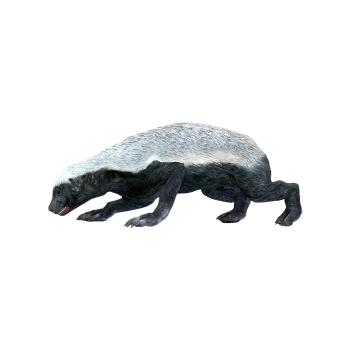
Honey Badger (3D animated model)
194 View
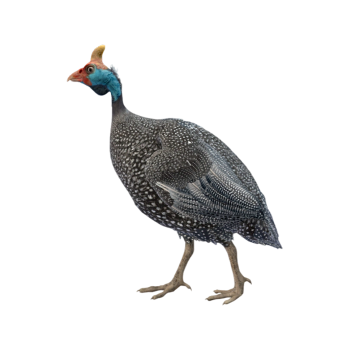
Guinea fowl (3D animated model)
165 View
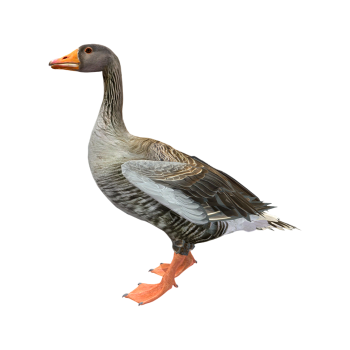
Wild Goose (3D animated model)
187 View
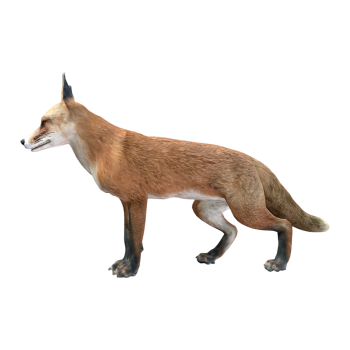
Red Fox (3D animated model)
155 View
Random Model
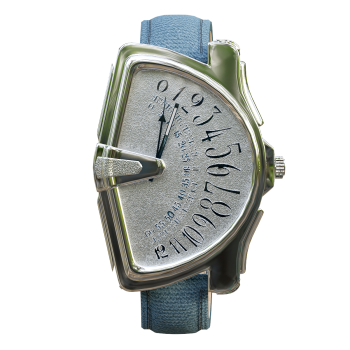
Ar Watches Creative Watch
968 View

Aston Martin F1 AMR23 Racing
745 View

White noble ladies high heels 3D model
1204 View


Modern solid wood cabinet 3D model
585 View

Natural Retro Bamboo Curtain 3D Model
1190 View


Black edged grasshopper male
957 View

the girl with glasses
3402 View